Nintendo 64
Nintendo's cartridge-based 3D console
- 1996Released
- 5thGeneration
- NintendoDeveloper
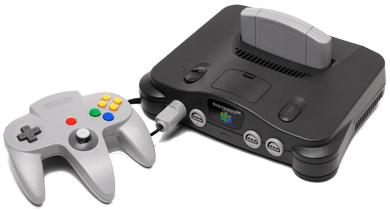
N64 Specifications
- Processor
- RISC NEC VR4300 (64-bit)
- Processor Speed
- 93.75 MHz
- Co-Processor
- SGI RISC RCP(Reality co-processor) (64-bit)
- Co-Processor Speed
- 62.6 MHz
- Graphics Processor
- RDP (Reality drawing processor), built into co-processor
- RAM
- 4 MB RDRAM upgradeable to 8MB
- Resolution
- 256 x 224 to 640 x 480 pixels
- Sound
- ADPCM-support, 16-bit stereo (MP3 support via software)
Overview
The Nintendo 64 (N64) was Nintendo’s third home video game console, built around a 64-bit NEC VR4300 CPU.
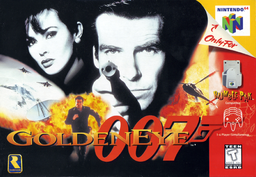
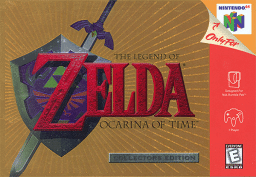
Many of its games are regarded as among the best ever made, from The Legend of Zelda: Ocarina of Time to GoldenEye 007, which helped popularise first-person shooters on consoles.
Arriving later than the PlayStation and Saturn, the Nintendo 64 was the most powerful console of the fifth generation.
Its graphics chip supported trilinear filtering and other advanced 3D techniques, but the console was held back by its cartridges, which held far less data than CDs.
The limited storage forced developers to use fewer textures and rely on techniques such as Gouraud shading or very simple textures.
N64 emulation has taken a long time to mature. Nearly every game is now playable, but a few still have problems. Most of the difficulty lies not with the CPU but with the graphics hardware.
The N64’s Reality Co-Processor works in ways that are hard to reproduce on modern GPUs: although today’s graphics cards are far more powerful, emulators cannot drive them as directly as N64 developers drove the original hardware.
Poor documentation of the custom microcode some games used made things harder still. One of the best-known examples is Star Wars: Rogue Squadron.
Project64 is the most widely used emulator on Windows and now ships with the GLideN64 video plugin. For the highest accuracy, low-level graphics emulation is available at a higher performance cost.
Key Features
64-Bit Power
The most powerful fifth-generation console, with a 64-bit CPU.
Advanced 3D
Its graphics chip supported trilinear filtering and advanced 3D.
Cartridge Media
Stuck with cartridges, which held far less data than CDs.
Expandable RAM
Its 4 MB of RDRAM could be upgraded to 8 MB.