
Blood Omen: Legacy of Kain Recompiled
PC port of Blood Omen: Legacy of Kain
- RecompilationPort Type
- AlexbeavDeveloper
- 15 Nov 2026Page Updated
Details
- Developer
- Alexbeav
- Port Type
- RecompilationA tool translated the game's original machine code into C automatically, which was then built as a native PC program.
- AI Use
- Mostly AI-builtThe project says: “AI writes most of the code; the evidence discipline decides what survives.” Source
- Logo
- AI-made fan logo, free to use · Full size
- Source Code
- GitHub
- Page Updated
Platform Support
ScreenshotsView All (6)
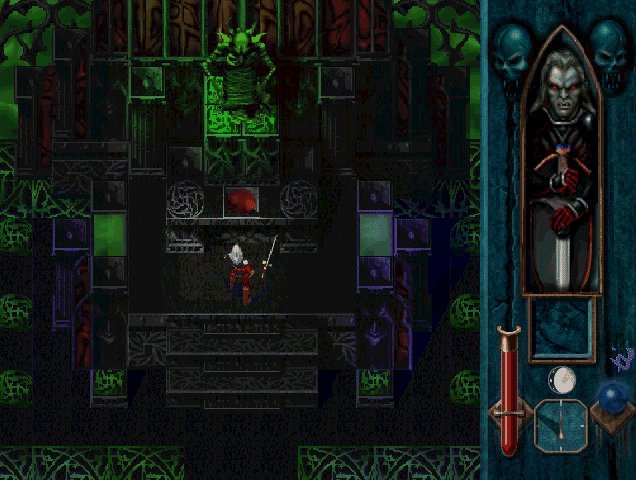
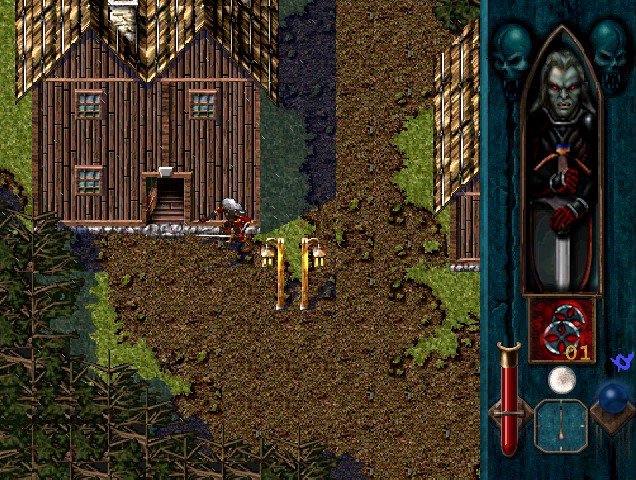
Overview
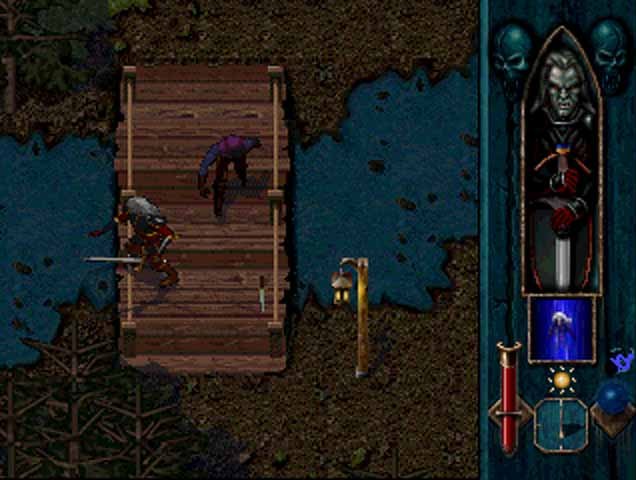
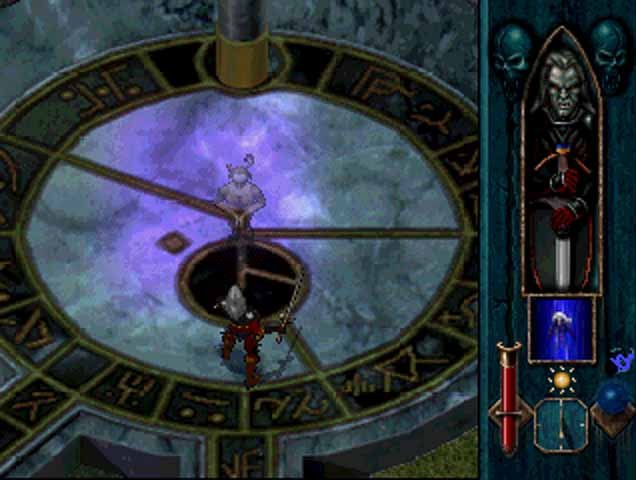
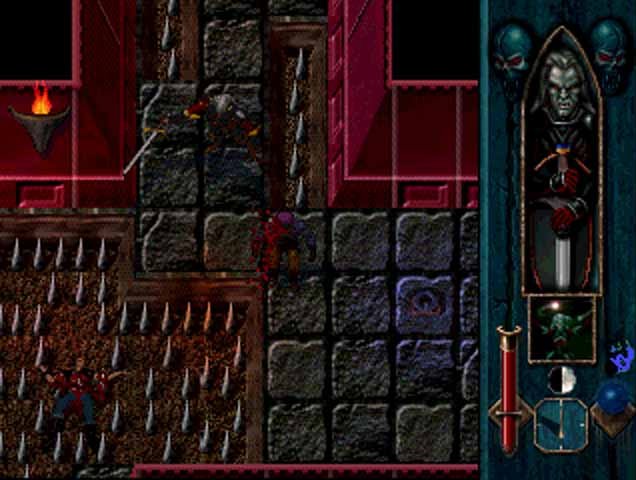
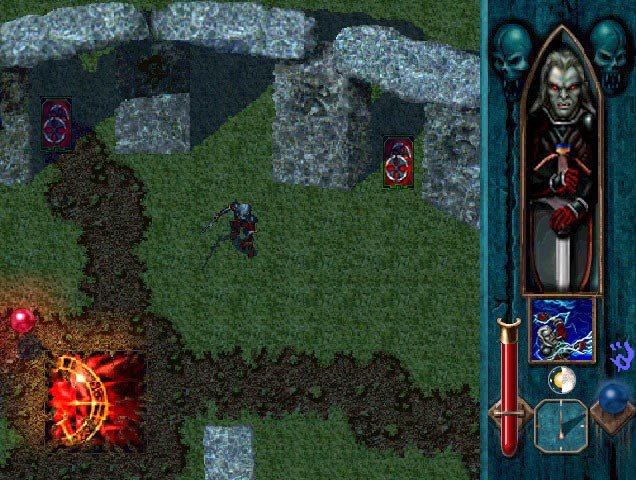
Blood Omen: Legacy of Kain Recompiled is a native version of Blood Omen: Legacy of Kain for Windows, Linux and macOS, made by static recompilation with PSXRecomp. It is a build kit: the download holds the recompiler, the recomp-ui launcher and a setup wizard, but no playable game. On first run the wizard reads your disc, generates C code from the game and compiles it on your computer, which can take several minutes.
On Windows you install Python 3 and the wizard downloads the other build tools; on Linux and macOS you install CMake, Ninja, Python 3 and a C/C++ compiler first. The kit includes optional enhancement packages for faster loading, CD speed, PGXP geometry correction and a bezel. Version 0.3.6 is an early release: Windows setup and compilation were checked automatically, but gameplay and Linux and macOS setup are unverified, and macOS builds are not notarised.
The author says AI tools were used heavily in making it. The download contains no game data. It needs Blood Omen: Legacy of Kain (USA, SLUS-00027), dumped from your own disc, and a US SCPH-1001 BIOS dumped from your own console is recommended; the kit includes the open-source OpenBIOS as a fallback.
How to Set It Up
- Download the zip for your system: Windows x64, Linux x64, or macOS for Apple Silicon or Intel.
- Install Python 3 on Windows (the wizard downloads the other build tools); on Linux and macOS install CMake, Ninja, Python 3 and a C/C++ compiler.
- Extract the zip into a writable folder and run
Blood_Omen__Legacy_of_Kain_Recompiled(Blood_Omen__Legacy_of_Kain_Recompiled.exeon Windows). - In the setup wizard select your CUE file (keep its BIN files beside it) and your BIOS dump, or use the included OpenBIOS, then choose Generate & rebuild.
- The first run compiles the game and takes several minutes; later launches start it directly.
Advertisement
Download Blood Omen: Legacy of Kain Recompiled
What's new in v0.3.8Blood Omen: Legacy of Kain Recompiled v0.3.8
Blood Omen: Legacy of Kain 0.3.8 moves from psxrecomp pin I 0.1.19 (v0.3.7) to pin I 0.1.23 (psxrecomp 578bd3b, recomp-ui 5302f1f). Nothing else changes in this title’s repository.
New features
These came with 0.3.7 and are part of 0.3.8. If you are updating from an earlier version, they are new to you.
Replays: Replay recording is now supported in Blood Omen: Legacy of Kain. Press F12 to start recording during play, then F12 again to stop and save in an available replay slot.
Recording needs at least one free replay slot. If every slot is occupied, the game shows “No free replay slots”. Open the save states menu with F7, then press Tab to switch between Save States and Replays. Select a recording and press Enter to play it, F2 to rename it, Delete to remove it or E to export it.
Replays record your inputs rather than video, so you can share them as lightweight files with someone using the same version of the game. Compatibility with different versions is not guaranteed. Differences in the game build, disc, BIOS or replay settings can affect playback.
Press a gameplay control to stop a replay and take control at that point. When a replay finishes, the game continues from its recorded endpoint under your control.
You can record during play or from boot. To record from boot, tick “Record replay” in the GUI launcher before starting the game. F12 stops and saves this recording too. F12 and F7 are the default shortcuts and can be rebound; F11 toggles fullscreen.
To keep replay timing repeatable, both recording and playback use interpreter mode instead of native compiled execution. This can reduce performance, especially on weaker systems.
Recording currently supports a single Player 1 pad. PS1 Mouse, neGcon, GunCon, multitap and netplay recording are not supported.
Keyboard profiles: Save named keyboard profiles and reuse them across sessions. Use Save as, Load, Rename and Delete to manage your profiles. The Default profile stays protected.
Dual key bindings: Assign up to two keyboard keys to each action. Right-click a binding to clear it. Duplicate assignments stay visible and are highlighted so you can resolve conflicts.
PS1 Mouse, neGcon and GunCon: These controller types can be selected for games that support them. Whether Blood Omen: Legacy of Kain uses one of them was not tested.
Launcher improvements: Each configured player gets a separate controls tab. The launcher remembers downloaded cover art and lets you choose a replay as a startup option.
Portable paths: Portable packages can retain local disc, BIOS and save paths when you move the game folder. Move the whole installation, including its configured local files.
CHD disc images: Setup accepts CHD, a compressed disc-image format, in the file picker for supported discs.
Movies fill the picture: A 24-bit movie frame is shown at its own height, so the black bars above and below a movie are gone. Setting: Display, “Crop movies to the picture”. From 0.3.8 it is off by default (see Changes).
Save-state compatibility: Make an in-game save before updating, and keep a backup of your old installation and memory cards. Save states from older builds can be incompatible with this update.
Changes
- OpenGL renderer above 1x render scale: a column drawn as one triangle with a one-pixel short side is now filled whole, as the PlayStation does; before, thin vertical stripes could show. Native (1x) output does not change.
- Movies shown in 24-bit colour stay 24-bit when the game moves them inside video memory; before, they could flicker.
- Two of the game’s graphics transfers (DMA) are handled as the PlayStation does; before, some menus could be drawn over the previous frames.
- OpenGL renderer: more exact triangle edges and one-pixel strips, closer to the software renderer.
- Interlaced (480i) screens: the field on display is no longer drawn over.
…
27423733047c13c636efa5886cadb245609d3bc17bd8f89292768bc266f84bf8
19984a67c57b8d2c99cbef83d99b8d74566ed40997b14d9252e4f8204d00491a
370b0b044296363868388460a5606c09070c5cbe3629870754edeaf30e05148f
7d90bc546c1ec28a758fe9b0f1970348774283ca1cc83fab55d8900c63e591f2
f13e326c104b40ab574af63bd4d20bc0711d379aff6266246038b13bdf3d8c43