Intellivision
Mattel's rival to the Atari 2600
- 1979Released
- 2ndGeneration
- MattelDeveloper
Intellivision Specifications
- Processor
- General Instrument CP1610 (16-bit)
- Processor Speed
- 894 kHz (NTSC)
- RAM
- 1,456 bytes
- GPU
- General Instrument AY-3-8900 STIC
- Resolution
- 159 x 96 pixels
- Colours
- 16
Overview
The Intellivision was developed by Mattel Electronics and test-marketed in Fresno, California in 1979, before a national launch in 1980. It was one of the first consoles with a 16-bit processor, and its graphics and sound were a clear step up from the Atari 2600.
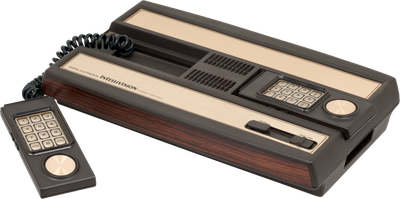
Its controllers had a 12-button keypad, which took plastic overlays printed for each game, and a disc that could be pressed in 16 directions. Mattel’s advertising, fronted by George Plimpton, compared its games directly with the Atari 2600’s.
The Intellivision sold around three million units. Mattel planned many add-ons, including a keyboard component that was never widely released, and the Intellivoice speech module. After the video game crash of 1983 Mattel closed its games division, and a group of former employees bought the rights and kept selling the console as INTV Corporation until 1991.
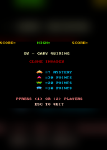
Well-known games include Utopia, Major League Baseball, Astrosmash, Night Stalker and Burgertime. jzIntv is the reference Intellivision emulator today and also comes with tools for writing new games. You need the Exec and Graphics ROM files from the original console to use it.
Key Features
16-Bit Processor
One of the first consoles with a 16-bit processor.
Keypad Controller
A 12-button keypad that took printed overlays for each game.
16-Way Disc
A control disc that could be pressed in 16 directions.
Intellivoice
An add-on speech module gave some games spoken voices.