Other
Systems from makers of only one or two
- 13Systems
- 1978–2003Released
- 30Emulators
Home Consoles 6


Handhelds 2


Computers and Platforms 5


Advertisement
Many important systems came from companies that only made one or two of them. This section collects them, along with Adobe Flash, which was not a console but was home to a huge library of browser games.
 Magnavox Odyssey²
Emulators and more
The Odyssey², from 1978, was made by Magnavox, by then part of Philips, and sold in Europe as the Philips Videopac. Its built-in keyboard set it apart from the Atari 2600.
 Intellivision
Emulators and more
Mattel’s Intellivision, from 1979, was the Atari 2600’s main rival, advertised for its better graphics. Its controller had a disc and a number pad with overlays for each game.
 ColecoVision
Emulators and more
Coleco’s ColecoVision, from 1982, brought near-arcade graphics home and came with a port of Donkey Kong. An adapter even let it play Atari 2600 games.
 Vectrex
Emulators and more
The Vectrex, from 1982, by GCE and later Milton Bradley, had its own built-in vector screen for sharp line graphics, with coloured overlays for each game.
 ZX Spectrum
Emulators and more
Sinclair Research’s ZX Spectrum, from 1982, was the cheap home computer that started the British games industry, with thousands of games from bedroom programmers.
 Amstrad CPC
Emulators and more
Amstrad’s CPC, from 1984, came with its own monitor and tape or disc drive, and was popular in the UK, France and Spain.
 Sharp X68000
Emulators and more
Sharp’s X68000, from 1987, was a Japanese home computer powerful enough for near-perfect arcade ports, which made it a favourite for arcade ports such as Street Fighter II.
 FM Towns
Emulators and more
Fujitsu’s FM Towns, from 1989, was a Japanese PC with one of the first built-in CD-ROM drives, known for its multimedia games and enhanced ports.
 Philips CD-i
Emulators and more
Philips’ CD-i, from 1991, was a multimedia CD player that also played games, including three Zelda and one Mario game licensed from Nintendo.
 3DO
Emulators and more
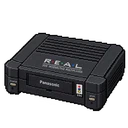
The 3DO, from 1993, was a design licensed by The 3DO Company to makers such as Panasonic. Its high price held it back.
 Adobe Flash
Emulators and more
Flash, created by Macromedia and later owned by Adobe, ran a generation of browser games and animations until browsers dropped it in 2020. Ruffle and Flashpoint keep that content playable.
 WonderSwan / Color
Emulators and more
Bandai’s WonderSwan, from 1999, was a Japan-only handheld designed by Gunpei Yokoi’s company, Koto. The WonderSwan Color followed in 2000.
 N-Gage
Emulators and more
Nokia’s N-Gage, from 2003, was a phone and handheld console in one. Its awkward “side-talking” design and game-swapping under the battery made it a famous flop.