SEGA NAOMI & Atomiswave
Dreamcast-based arcade boards from SEGA and Sammy
- 1998Released
- Arcade BoardType
- SEGA and SammyDeveloper
SEGA NAOMI & Atomiswave Specifications
- Processor
- Hitachi SH-4
- Processor Speed
- 200 MHz
- RAM
- 32 MB main RAM, 16 MB video RAM, 8 MB sound RAM (NAOMI)
- GPU
- NEC/VideoLogic PowerVR2 (CLX2)
- Resolution
- 640 x 480 Pixels
- Media
- ROM boards, GD-ROM (NAOMI), ROM cartridges (Atomiswave)
Overview
NAOMI (New Arcade Operation Machine Idea) is an arcade system board that SEGA released in 1998. It shares most of its design with the Dreamcast, with an SH-4 processor and PowerVR2 graphics, but has twice the main and video memory. This made it easy to bring NAOMI games to the Dreamcast, and many arcade hits, such as Crazy Taxi, Power Stone and Marvel vs. Capcom 2, were ported.
Games came on large ROM boards, and later on GD-ROM discs that loaded the game into RAM on a DIMM board. Several NAOMI boards could be linked in one cabinet, and SEGA built NAOMI 2 in 2000 with an extra geometry processor and a second graphics chip, used for games such as Virtua Fighter 4 and Initial D.
NAOMI was also licensed to other companies. Capcom, Namco, Taito, Tecmo and many smaller developers released games for it, and it stayed in use until about 2009, making it one of SEGA’s longest-lived arcade platforms.
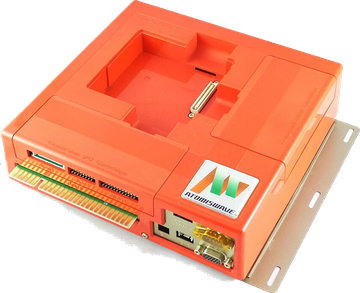
Atomiswave is an arcade system that Sammy released in 2003. It is based on the same Dreamcast technology and uses cheap, swappable ROM cartridges. Its library is mostly fighting games, such as The King of Fighters XI, Samurai Shodown VI and Guilty Gear Isuka.
Flycast is the usual choice today for both NAOMI and Atomiswave: it runs most of the library well, including NAOMI 2 games, and supports online play. MAME and DEmul also emulate these boards.
Key Features
Dreamcast Inside
Shares most of its design with the Dreamcast, with double the memory.
GD-ROM and DIMM
Later games loaded from GD-ROM discs into RAM on a DIMM board.
NAOMI 2 Upgrade
Added a geometry processor and a second graphics chip in 2000.
Atomiswave Carts
Sammy's board used cheap, swappable ROM cartridges.